
Barking Creek Barrier – Gate 3 Refurbishment
The Barking Creek Barrier Gate 3 refurbishment was one of Tone Scaffolding Services Ltd’s most technically demanding live infrastructure projects. Working for Balfour Beatty, the project involved the design, erection, adaptation and dismantling of a highly engineered suspended access scaffold system around a fully operational tidal flood barrier.
The scaffold package exceeded £1.48m and was delivered over a 42-week programme involving complex temporary works, operational restrictions and ongoing scaffold modifications throughout the refurbishment works.
The scaffold solution consisted of engineered support towers erected to the east and west piers of the barrier structure. Proprietary bridging beams spanning the full width of Gate 3 were independently supported from the permanent structure and were not supported by the scaffold towers themselves. Bespoke fabricated support brackets were installed to both opposing towers, allowing the bridging beams to be safely landed, positioned and manoeuvred into place using rolling bogey arrangements.
Suspended access scaffolds were then installed from the bridging beam arrangement to provide fully encapsulated access for blasting, UHP cleaning, coating and inspection works. From the fourth bay onwards, the scaffold was progressively constructed as cantilevered sections extending upwards towards the beam arrangement.
A major challenge throughout the programme was maintaining the operational capability of the flood barrier during testing exercises, emergency deployment requirements and ongoing river traffic movements.
To manage this, detailed erection, adaptation and dismantling sequences were developed and integrated into the overall construction programme. Weekly coordination meetings were held with Balfour Beatty, temporary works engineers, operational stakeholders and the Environment Agency (EA) to review tide conditions, environmental restrictions, scaffold loading and deployment schedules.
The project was further complicated when the EA suspended works for approximately six weeks due to crows and peregrine falcons nesting on and around the barrier structure. The project team worked collaboratively with all parties to re-sequence activities and minimise programme disruption while maintaining environmental compliance.
Strict checking and approval procedures were maintained throughout the works. All design drawings, calculations and scaffold adaptations were reviewed prior to implementation.
An independent advanced scaffold inspector, working alongside the design engineer, also carried out inspections throughout the erection stages to ensure the structure remained compliant with the approved design, temporary works requirements and relevant scaffold standards.
A dedicated scaffold attendance team remained on site throughout the programme to undertake scaffold adaptations and rapid-response support works, ensuring the scaffold remained operational and compliant despite ongoing changes to the operational environment.
The successful completion of the project demonstrated Tone Scaffolding Services Ltd’s capability to safely deliver highly engineered scaffold solutions within an extremely challenging live infrastructure environment.
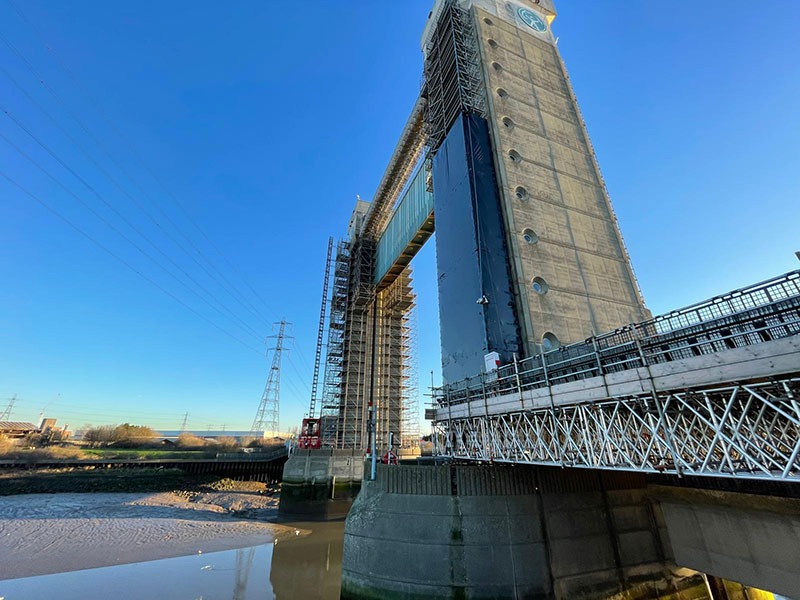
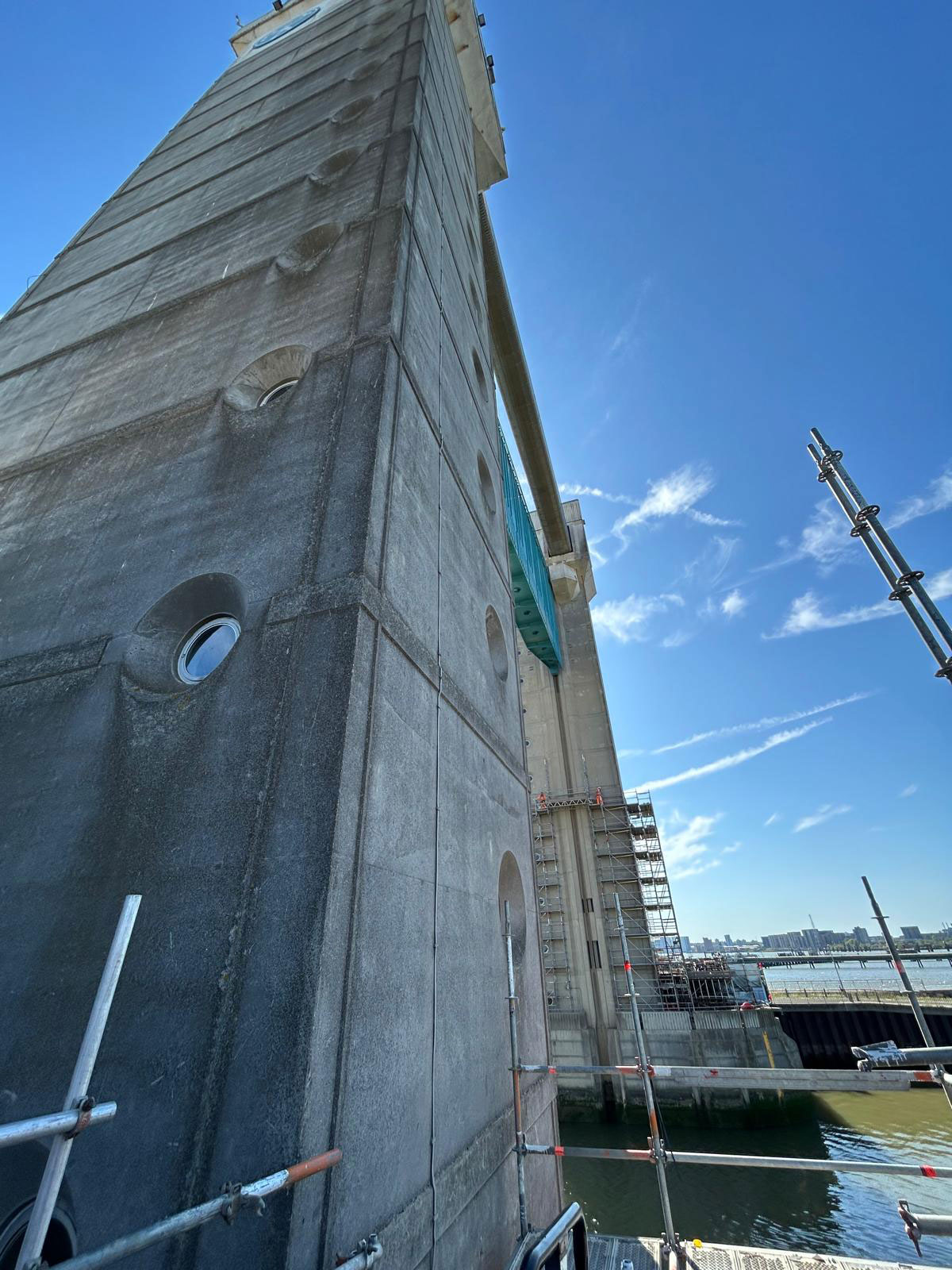
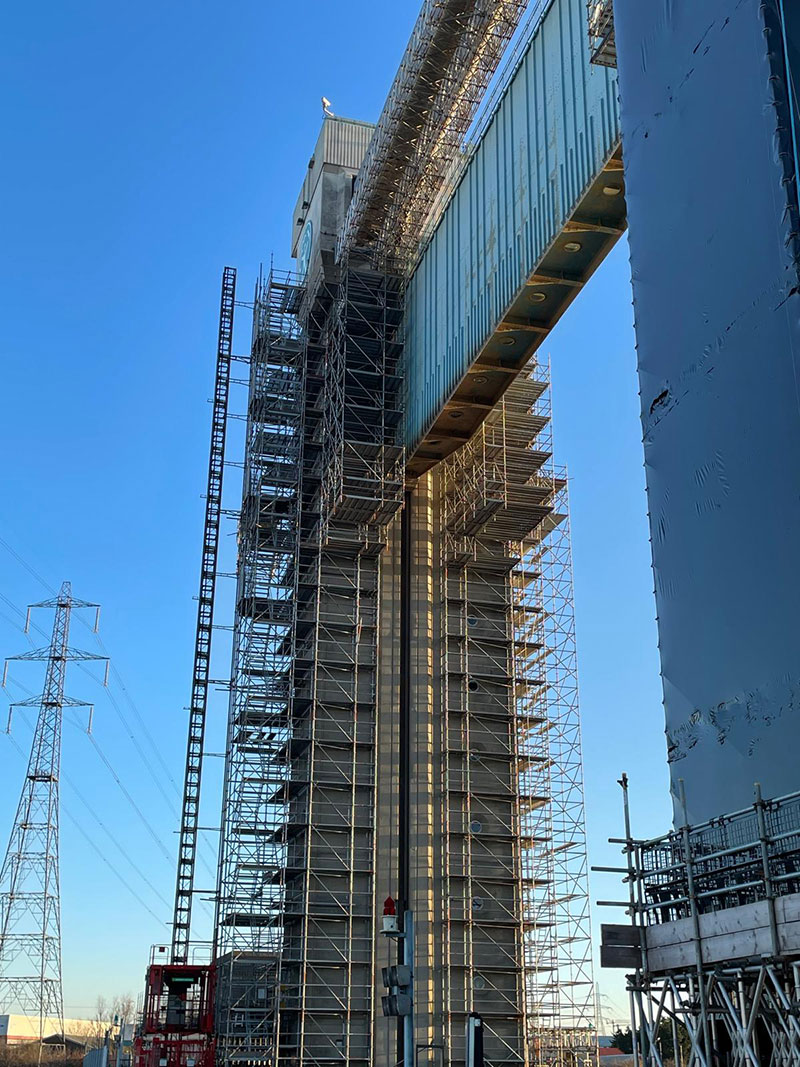
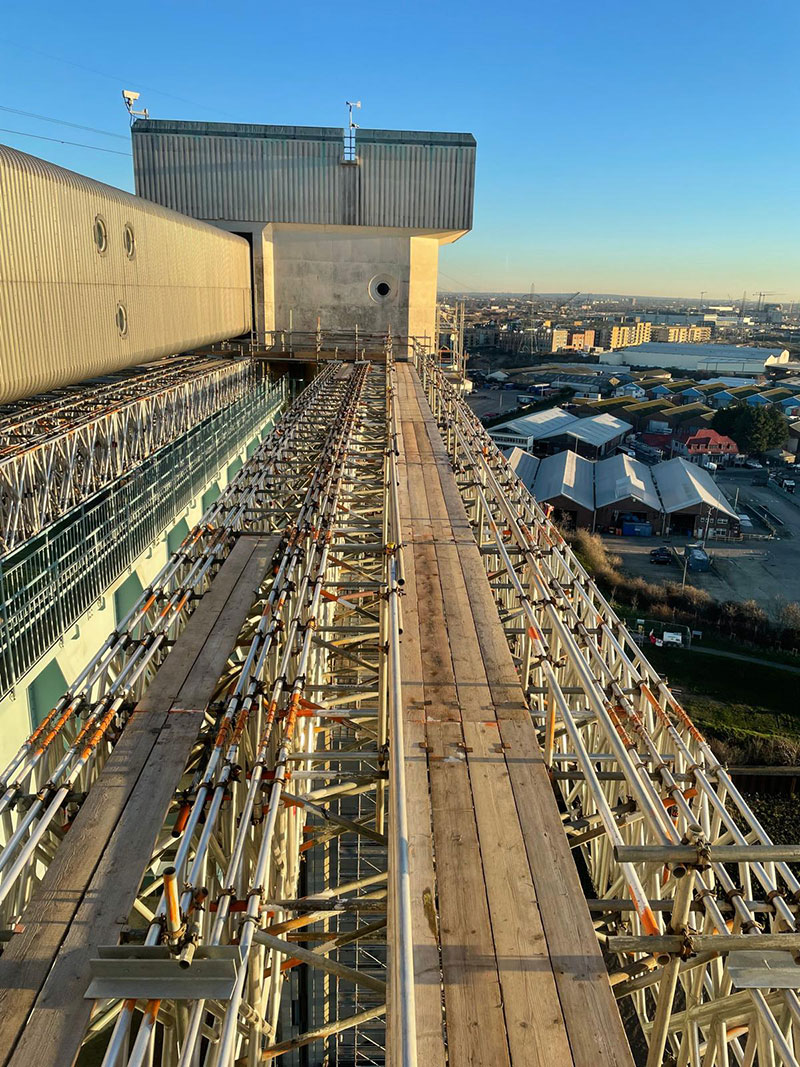
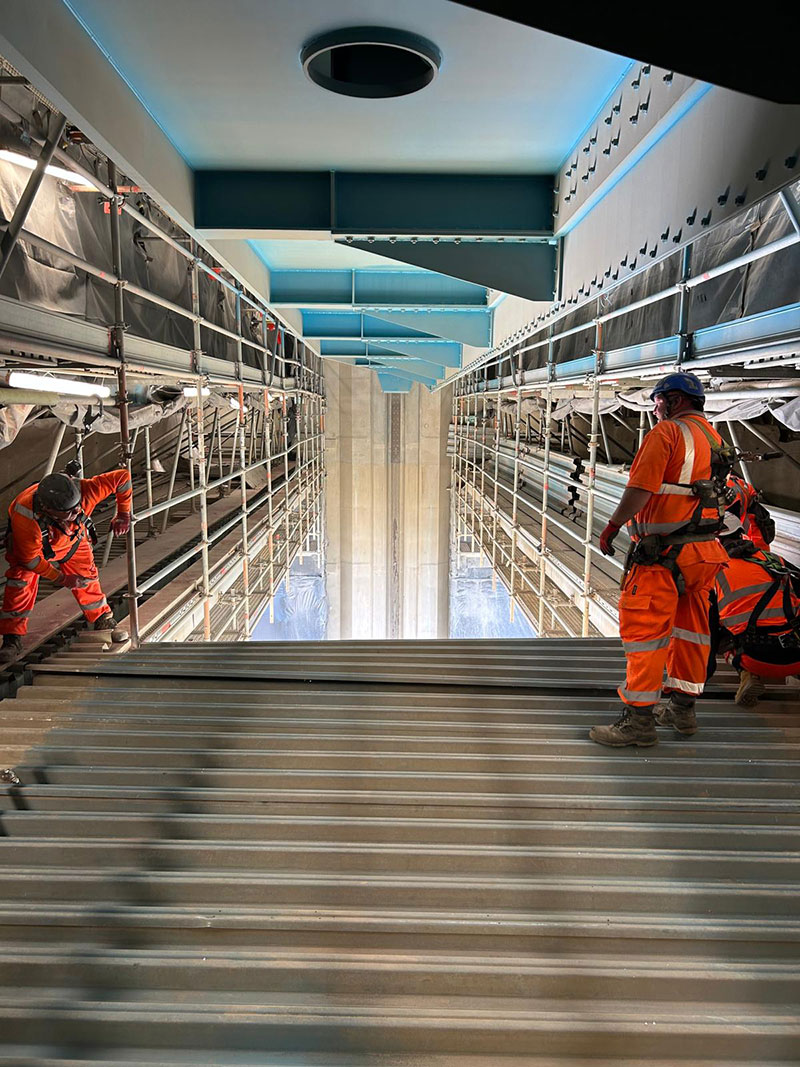
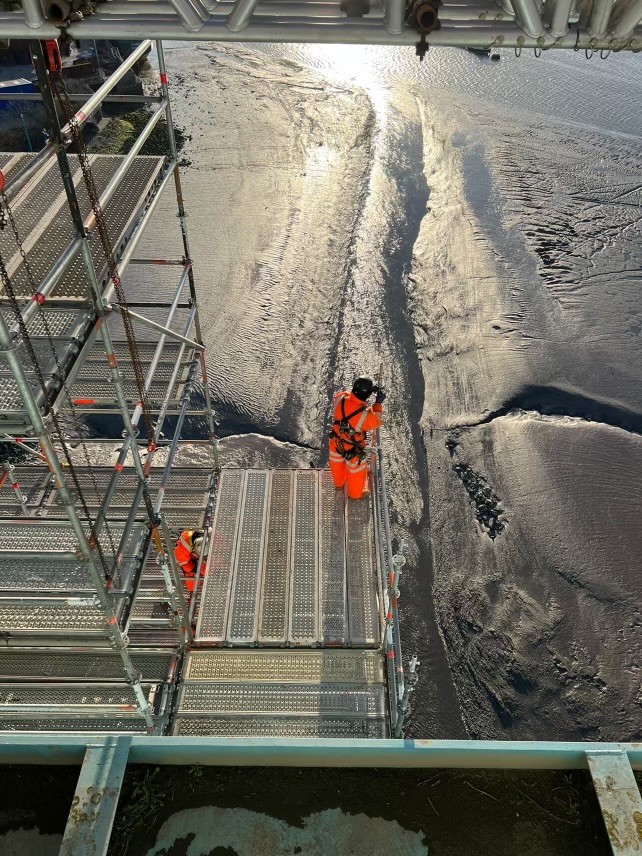
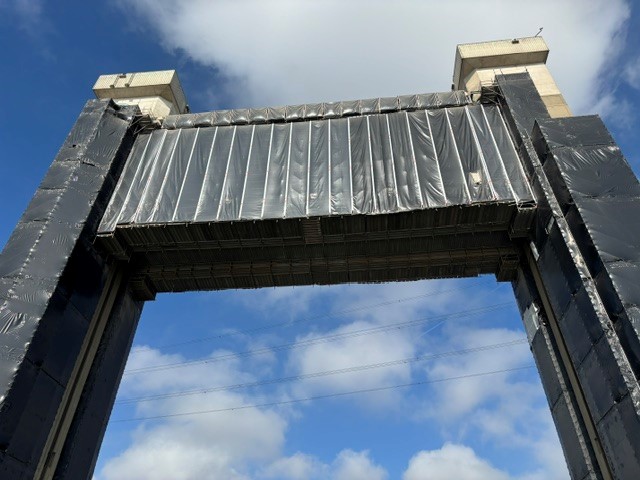

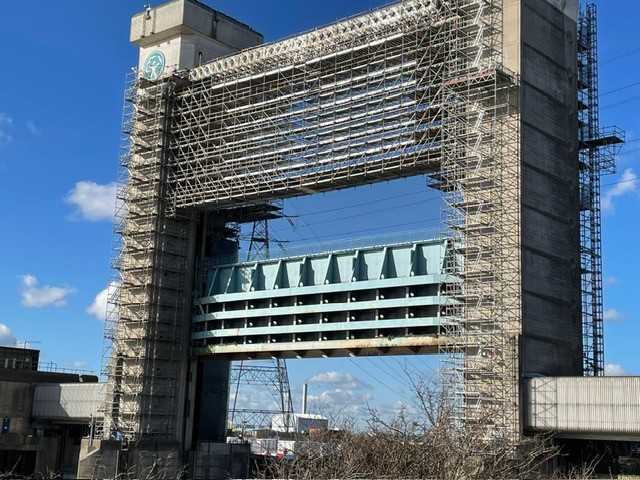
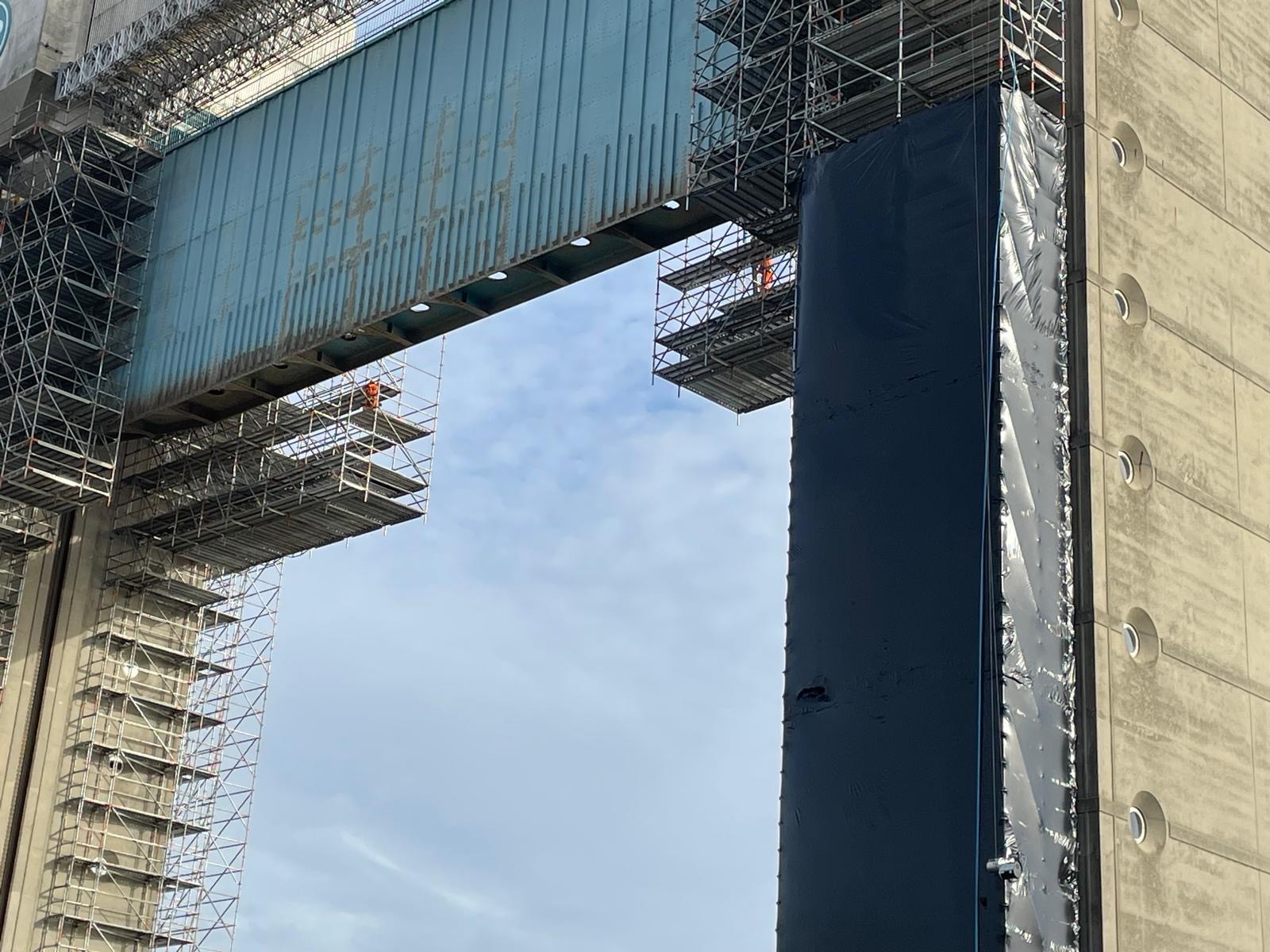
The Barking Creek Barrier Gate 3 refurbishment required a bespoke suspended scaffold system capable of providing safe access around a live tidal flood barrier while maintaining the operational capability of the barrier throughout the programme.
The gate measured approximately 39m wide, 11m high and sat around 24m above ground level. Traditional support scaffold arrangements were not suitable due to tidal conditions, restricted access and operational constraints associated with the barrier structure.
The final design consisted of engineered support towers erected to the east and west piers of the structure. These towers were mechanically tied into the permanent structure and extended above the gate to provide access to the proprietary bridging beam arrangement spanning the full width of the barrier. The primary beam loads remained independently supported from the permanent structure and were not supported by the scaffold towers.
A significant engineering challenge involved safely landing and positioning the proprietary bridging beams during erection. To overcome this, bespoke steel support brackets were fabricated and installed to the opposing tower structures. Rolling bogey systems were then positioned on both towers, allowing the beams to be carefully manoeuvred and aligned into their final positions in a highly controlled manner.
Suspended access scaffolds were installed from the bridging arrangement, providing full encapsulated access to both faces and the underside of the gate for blasting, Ultra High-Pressure cleaning. (UHP) cleaning coating and inspection works. From the fourth bay onwards, the scaffold was progressively constructed as cantilevered sections extending upwards towards the beam arrangement.
One of the key engineering challenges involved maintaining the ability to deploy the barrier during testing exercises and emergency flood events. To achieve this, removable decking sections, profile sheeting arrangements and butting tube sections were incorporated into the scaffold design. Only the decking, profile sheeting and butting tubes required removal during emergency deployment procedures, significantly reducing dismantling time and operational disruption.
Movement control across the suspended scaffold sections also presented challenges due to the exposed tidal environment and wind loading conditions. To minimise movement and reduce emergency deployment times, catenary wire systems were installed above three of the central hanging lifts. These systems were specifically incorporated to reduce scaffold sway once the barrier had been lowered, removing the need for extensive encapsulation sheeting removal during emergency operations.
Client feedback throughout the project was extremely positive, particularly regarding technical capability, communication, safety performance and the ability to adapt quickly within a highly complex operational environment.
The project further strengthened TONE Scaffolding Services Ltd’s reputation for delivering specialist engineered scaffold solutions on major infrastructure projects.